Palo Alto access notes
mixed residential, campus, retail, and tech-office access needs shape how a request should be described. Mention parking, building entry, gate codes, and access limits before dispatch.
 Paloalto Locksmith
Palo Alto locksmith request desk
Remote and fob support for Palo Alto residents, drivers, property managers, and small businesses.
mixed residential, campus, retail, and tech-office access needs shape how a request should be described. Mention parking, building entry, gate codes, and access limits before dispatch.
busy El Camino, University Avenue, and neighborhood parking realities can change the tools and time needed. Photos and lock or vehicle details help prevent mismatched service.
Explains common fob, remote, and transponder checks without promising unsupported models. The safest request includes the door, lock, key, vehicle, or authorization details before anyone is sent.
Share clear photos when safe, the exact neighborhood or cross street, access notes, and whether the request involves a home, vehicle, business, mailbox, safe, or gate.
Describe the property or vehicle, the lock or key symptoms, and any access constraints so the request starts with useful context.
City locksmith page, car locksmith, rekeying, and service request.
Decision guide
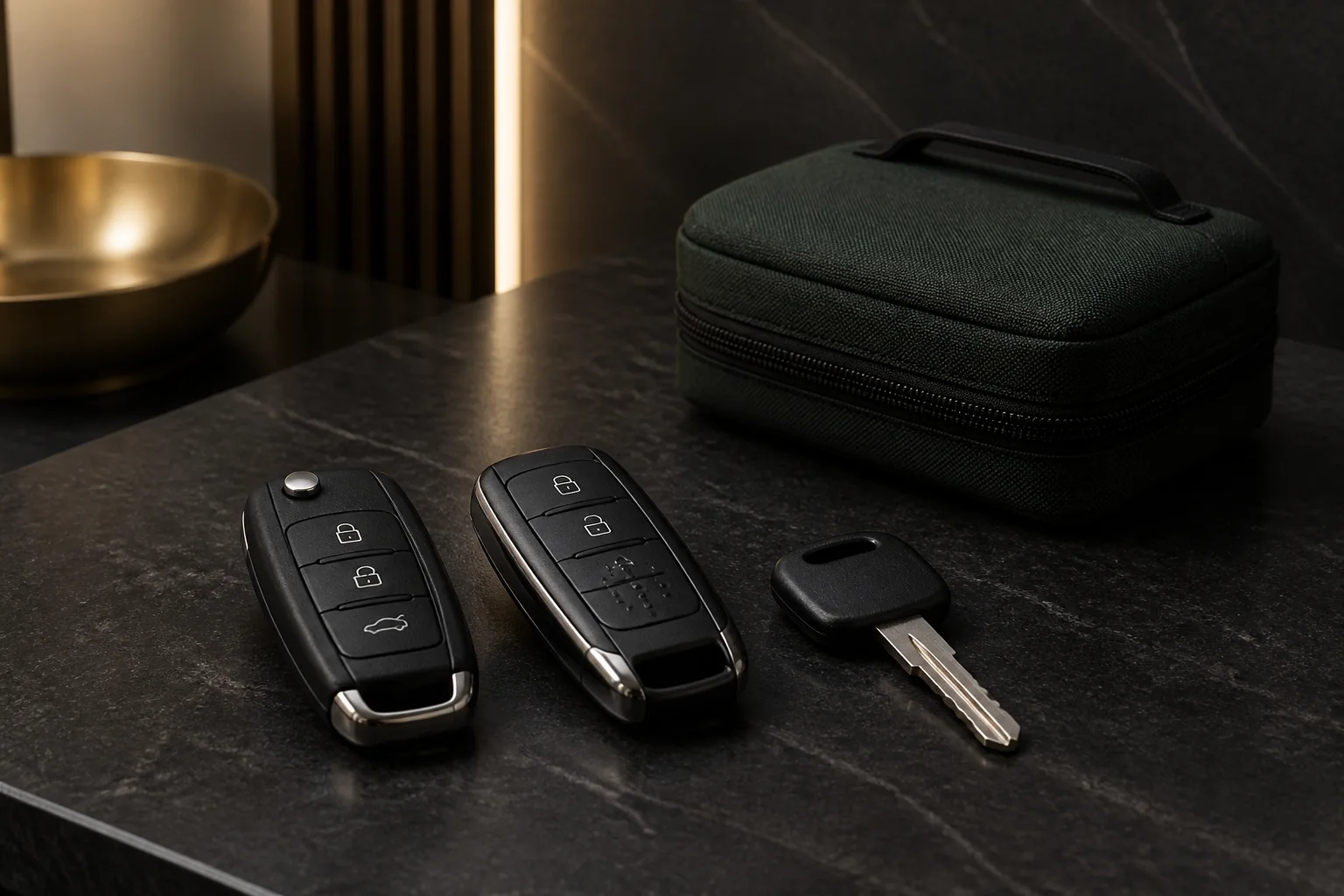
A fob request should identify the vehicle and the exact condition of the existing key or remote. Note whether buttons work, whether the vehicle recognizes the key, and whether the fob is original, replacement, or unknown. Do not assume a purchased remote is compatible because its shell looks similar. A clear model-year description is more useful than a photo that exposes private identifying information.
Service decision guide
A programming request needs the vehicle details, the fob’s visible identifiers, whether it previously worked, and whether another working key is available.
Battery replacement, button response, physical blade operation, and vehicle recognition are separate observations. Do not assume that a similar-looking fob is compatible with a particular vehicle.
Note whether access is from a residence, managed building, retail frontage, office, campus, parking structure, or vehicle location. Include gate, reception, loading, parking, or property-management procedures. These practical facts help route the request without claiming that a particular service, part, time, or outcome is already confirmed.
No. Battery condition is only one possibility; compatibility and the vehicle’s response require individual diagnosis before a programming path is chosen.
Next step
Share useful observations and photos when safe. Do not send alarm codes, safe combinations, key-cut codes, complete identity documents, or payment-card information in the initial message.
Detailed service guide
A complete key fob programming request record should identify the remote, proximity fob, transponder, emergency blade, battery, buttons, and the vehicle's recognition behavior, describe the safest observable symptoms, and state the practical outcome being requested. Keep uncertain details labeled as uncertain. This distinction helps the review remain useful without turning an initial description into an unsupported diagnosis, compatibility promise, availability statement, price, or guaranteed result.
Before submitting key fob programming details, consider the remote, proximity fob, transponder, emergency blade, battery, buttons, and the vehicle's recognition behavior. Keep the account factual: note the location type, affected opening or vehicle, observable behavior, and relevant access procedures. Do not include passwords, alarm codes, safe combinations, key-cut codes, payment information, or complete identity documents. Sensitive verification belongs in an appropriate later step, not in the initial request narrative.
A useful key fob programming request begins with whether the fob ever worked, which functions fail, whether another key remains, and what the dashboard or locks do. Describe what can be seen or tested safely, what changed, and which outcome matters. Clear observations allow the request to be reviewed without presenting a guess as a diagnosis. They also make it easier to separate the primary problem from adjacent door, frame, key, vehicle, electrical, property-management, or authorization questions that may need their own review.
For key fob programming, record separating battery, compatibility, pairing, damaged-button, antenna, immobilizer, and broader vehicle-diagnostic questions. The purpose is not to diagnose the work through a form. It is to provide enough context to identify the right information path, recognize obvious constraints, and avoid a mismatched assumption. Use ordinary descriptions, include model or hardware details only when visible, and explain uncertainty directly instead of choosing a technical label that may not fit.
Planning this request requires attention to vehicle details, fob photos and markings, working-key count, battery history, exact symptoms, and authorization. That information changes the questions asked next and helps distinguish a straightforward request from one involving compatibility, damaged hardware, shared-building rules, vehicle electronics, or another specialist. Photos can support the description when they are safe to take, but an image never proves fit, condition, authorization, final scope, price, or availability.
Before submitting key fob programming details, consider purchasing a similar-looking fob, repeated unsupported pairing attempts, assuming a battery proves programming need, or exposing identifiers. Keep the account factual: note the location type, affected opening or vehicle, observable behavior, and relevant access procedures. Do not include passwords, alarm codes, safe combinations, key-cut codes, payment information, or complete identity documents. Sensitive verification belongs in an appropriate later step, not in the initial request narrative.
A useful key fob programming request begins with the registered owner or another person who can demonstrate lawful authority over the vehicle. Describe what can be seen or tested safely, what changed, and which outcome matters. Clear observations allow the request to be reviewed without presenting a guess as a diagnosis. They also make it easier to separate the primary problem from adjacent door, frame, key, vehicle, electrical, property-management, or authorization questions that may need their own review.
For key fob programming, record garages, parking structures, offices, campuses, and meeting locations where the vehicle and every available key can be reviewed together. The purpose is not to diagnose the work through a form. It is to provide enough context to identify the right information path, recognize obvious constraints, and avoid a mismatched assumption. Use ordinary descriptions, include model or hardware details only when visible, and explain uncertainty directly instead of choosing a technical label that may not fit.
Begin with the requested outcome, then test each assumption against the actual opening, vehicle, credential, or device. Confirm who controls the property or vehicle, which components are affected, whether the condition is constant or intermittent, and what normal operation looked like before the problem appeared. Note any earlier repair, replacement, battery change, key loss, move-in, tenant change, impact, weather exposure, or electronic warning that may provide context. Also identify practical limits such as parking, gate access, reception, shared-building rules, work windows, pets, alarms, or another contractor’s equipment. These details do not establish a diagnosis, but they reduce avoidable back-and-forth and help keep unrelated problems from being bundled into one unsupported promise.
A programming request needs the vehicle details, the fob’s visible identifiers, whether it previously worked, and whether another working key is available. Battery replacement, button response, physical blade operation, and vehicle recognition are separate observations. Do not assume that a similar-looking fob is compatible with a particular vehicle. A sound decision keeps the requested outcome separate from the final technical conclusion. It records what is known, names what still requires inspection, and avoids promises about parts, timing, price, or results before the exact conditions are confirmed.
No. Battery condition is only one possibility; compatibility and the vehicle’s response require individual diagnosis before a programming path is chosen. If the situation involves immediate danger to a person or animal, fire, or a medical concern, contact emergency services first. For a routine access request, use the form to provide the practical context described above and retain sensitive credentials until an appropriate verification step.
Use the secure form with enough context for practical triage. A vague request usually slows the process.