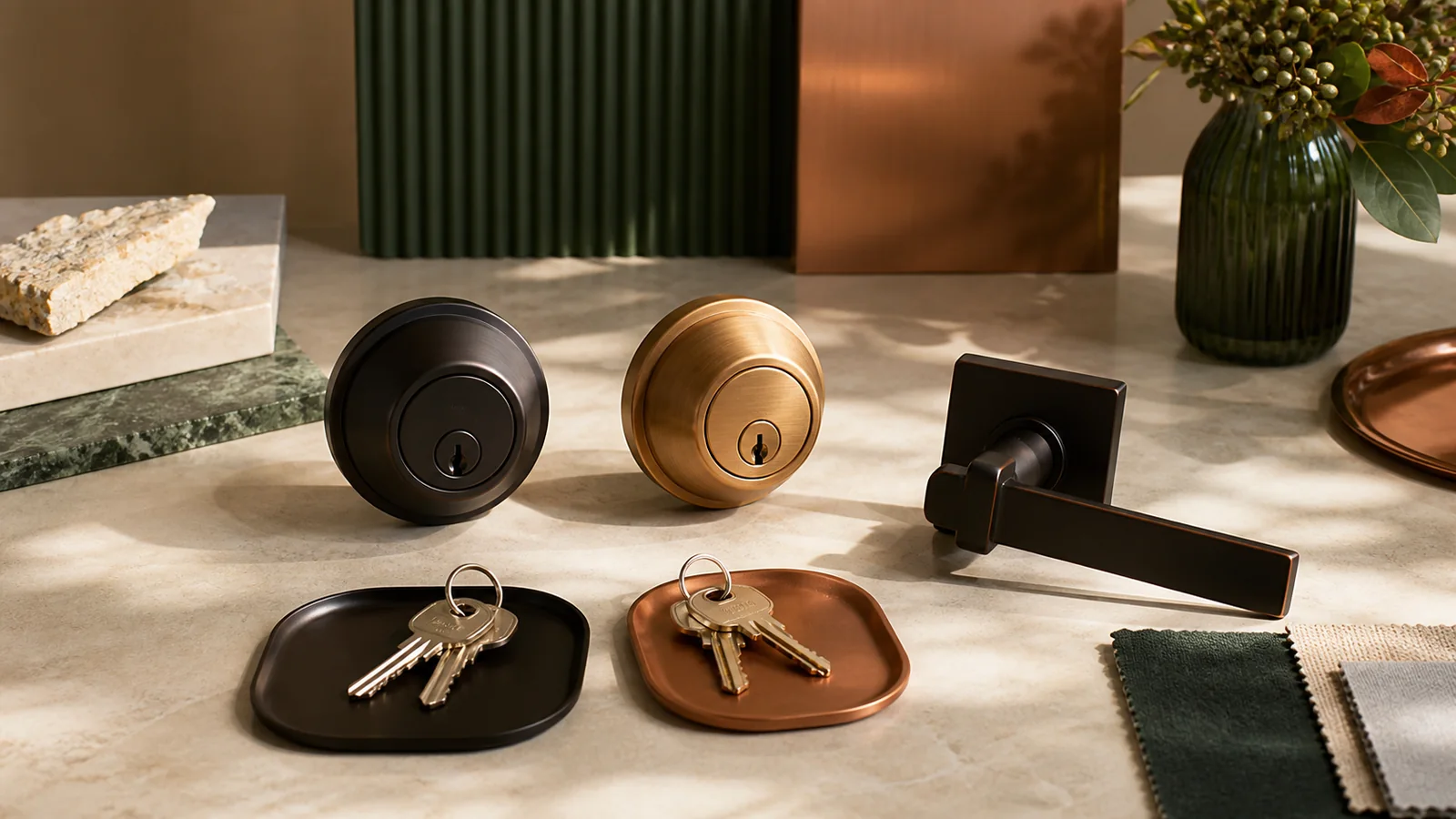
Rekeying changes which key operates a compatible lock; replacement changes the hardware itself. If the lock works smoothly and the goal is to retire old keys, rekeying may be the question to ask first. If the hardware is damaged, unreliable, unsuitable for the door, or you want different features, replacement deserves review.
Use the reason for the change as your first filter
Ask about rekeying when
- Keys changed hands after a move or staffing change.
- A key is missing but the lock otherwise appears functional.
- You want compatible locks evaluated for a shared key plan.
Ask about replacement when
- The lock, latch, strike, or trim is visibly damaged.
- Operation remains rough after basic door alignment concerns are considered.
- You want a different function, finish, keyway, or electronic feature.
The door matters as much as the cylinder
A difficult lock is not always a cylinder problem. Door sag, frame movement, loose hinges, weather swelling, and strike alignment can change how a latch or deadbolt operates. Describe whether the problem happens only when the door is closed, whether lifting or pushing the door changes it, and whether the bolt meets the strike cleanly. Avoid forcing the key or repeatedly driving a motorized lock against resistance.
What can be decided from a request
A request can identify the goal: invalidate old keys, restore reliable operation, coordinate several doors, or consider a smart lock. Photos can show the visible form and finish. They usually cannot confirm internal condition, exact compatibility, final parts, labor, or price. Those require an individual review of the door and hardware.
Prepare a useful comparison request
Include the number of doors, interior and exterior photos of each lock, the door material, whether all locks should use one key, and what you want to change. Do not send key-cut codes, alarm credentials, safe combinations, or full identity documents. Service availability and the right repair path are confirmed only after the request is reviewed.
Next decision
For a lost-key situation, start with the lockout checklist. For broader home access planning, see residential locksmith options. When ready, submit the secure request form with the observations above.